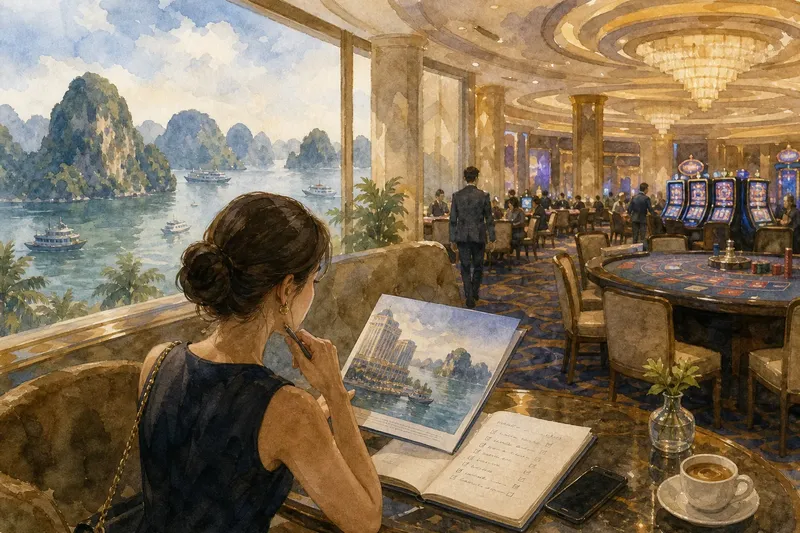
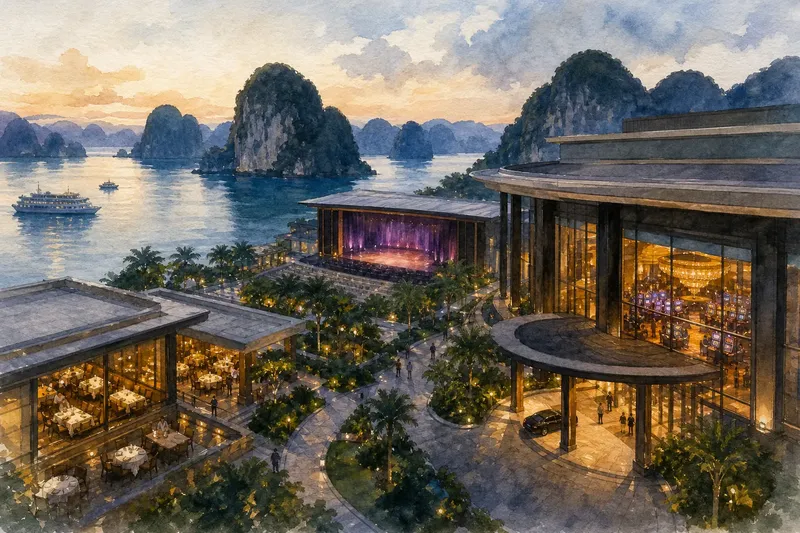
Casino Resort History and the Rise of the Destination Stay
Casino resort history explains how gaming venues came to be framed as destination stays, and how to describe that shift without inventing a local timeline.
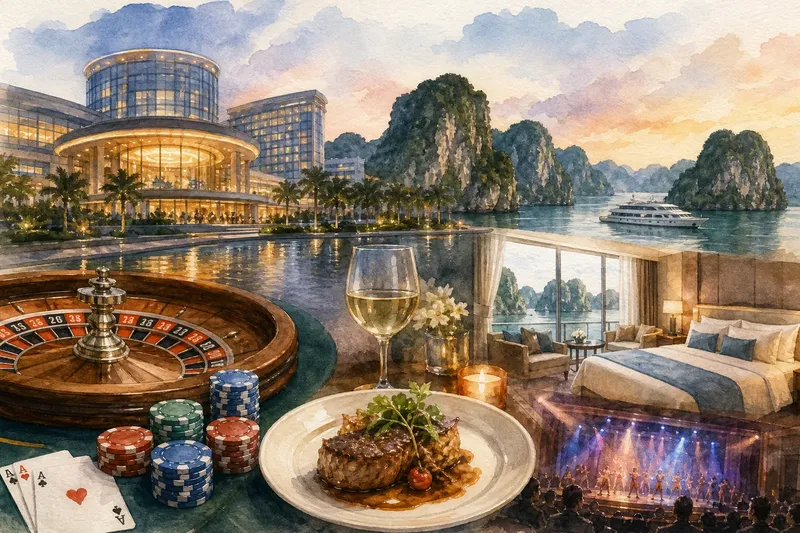
Casino resort history is easiest to follow by asking what changed in the way a visit was organised. Some venues were presented around gaming alone; others brought gaming together with lodging, dining or entertainment and framed the property as a place to spend more of a visit. That broad shift is useful context for Hạ Long, but it does not establish the history of any particular local venue.
What changed in the casino resort concept?
The central change was one of scope: a casino could be described not just as a gaming venue but as part of a wider leisure stay. In that model, accommodation, food, performances or events might sit alongside gaming. The mix depended on the property and its setting.
This is a change in how a venue is organised and presented, not a universal sequence in which every casino became a resort. The distinction also avoids assigning a date or local origin that the available account cannot support.
Why did the destination idea matter?
A broader leisure offer gave a visit more than one possible purpose. One guest might be interested in gaming, while another might prefer a meal or an event. For a business, describing a property as a destination could communicate that range; it does not, on its own, establish why a particular operator made a decision.
That is the historical point worth keeping: the resort concept widened the way some casino venues could be understood. It did not erase gaming or lead every venue towards the same design.
How did this idea shape a visit?
In a gaming-centred venue, the gaming area is the main reason for the visit. In a destination-style property, other activities may form part of the same stay. The difference is a useful way to describe emphasis, rather than a rigid classification of buildings.
For a reader considering Hạ Long, keep that general history separate from current visitor information. A broad account of the resort concept cannot confirm a local property’s facilities, access rules or operating arrangements.
What questions help explain casino resort history?
Did all casinos become resorts?
No. Casino venues followed different models, and the resort concept was one possible way to organise and present a property. Avoid describing it as an inevitable stage.
Does a resort-style property stop being gaming-centred?
Not necessarily. Gaming may remain prominent even when lodging, dining or entertainment is included. Describe the combination rather than assuming one activity displaced another.
Does “casino resort” refer to one property or a wider destination?
The term can be used for a property or a larger destination, so context matters. In a historical account, name the scale only when the source does so.
What can this history tell a visitor about Hạ Long?
It offers a way to understand how casino venues may be framed as part of a broader leisure stay. It cannot establish what any specific Hạ Long venue offers today; check current, venue-specific information for that.
How can you describe the shift without overclaiming?
When writing or reading an account, check each claim against what it actually says. Then choose the narrowest description that fits:
- Check the stated main activity. If gaming is presented as the central purpose, describe a gaming-centred model; if several leisure activities are named, describe a broader offer.
- Check whether lodging is explicitly included. If it is named, say the concept includes accommodation; if it is absent, do not infer an overnight stay.
- Check whether dining or entertainment is specified. If either is named, include that facility in the description; if neither is, leave it out rather than filling in a familiar resort image.
- Check the place and time covered by the account. If both are stated, keep the claim within that setting; if either is missing, present the point as general context, not local history.
- Check whether the source describes a trend or one venue. If it discusses a single property, do not turn it into a universal pattern; if it makes a broader claim without support in the text, qualify or omit it.
- Check whether “destination” describes the venue’s presentation or a documented visitor experience. If only the presentation is described, say the property was framed as a destination; if an experience is documented, describe only that account.
Say you are preparing a short account of Hạ Long and have a general description of casino resorts but no dated local record or named venue history. First, note that the description links gaming with lodging and dining. Next, classify it as a general account of a broader leisure model, not evidence about a specific Hạ Long property. Then remove any sentence claiming when that model arrived locally or what visitors can access. The resulting account explains the concept while making clear that local dates and facilities still need venue-specific sources.
For casino resort history, the useful distinction is between a documented local timeline and a general account of how a destination-style venue can be framed. Keep those separate, and readers can understand the concept without mistaking it for a record of Hạ Long’s particular venues.