Casino, Resort, Venue: What These Labels Do Not Tell You
Choose accurate wording for a casino resort in Hạ Long by separating the property’s name from its facilities, events and visitor information.
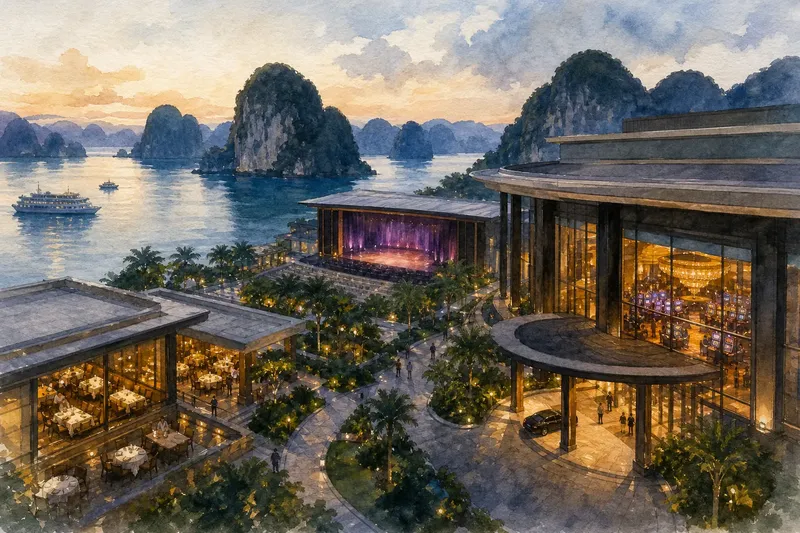
When you write about a casino resort in Hạ Long, a single label can blur the difference between a property, a facility and an event. Name the specific thing your sentence describes, then state only the details your source confirms.
What exactly are you naming?
A property name identifies a destination. A facility is a part of it, such as a dining room or meeting space. An event is something scheduled to happen. Keep those categories distinct, especially in visitor listings, captions and directions.
For example, “the property lists a meeting room” describes a facility. “A concert is scheduled” makes a separate claim about an event. The first does not establish the second.
Before publishing, underline each noun that names a place or activity. Check that the supporting information refers to that same thing.
How should a listing name facilities and events?
Use a specific facility name when the source provides one. If it says “dining room”, do not upgrade that to “restaurant” unless the source supports the narrower description. If it mentions an event space but no programme, describe the space without suggesting that a show is taking place.
Keep visitor-facing details close to their source. A property page may describe a room, while a separate event notice gives the date, activity and access information. Do not combine those claims unless both are confirmed.
What should you check before publishing a Hạ Long listing?
- Property name: Check the spelling and wording in the source; if they match, use that name, but if they differ, verify it before publishing.
- Property description: Check which type of property the source explicitly names; if it names one, use that term only for the property, but if it does not, use the confirmed name without adding a category.
- Gaming reference: Check whether the source specifically mentions gaming; if it does, describe that subject directly, but if it does not, do not infer gaming from another property label.
- Dining facility: Check the exact dining term in the source; if it names a restaurant, use “restaurant”, but if it names only a dining room or gives no detail, retain that wording or omit the claim.
- Event space: Check whether a room or event space is identified; if it is, name the space, but if it is not, do not imply that the property has one.
- Scheduled event: Check for a named activity and current schedule; if both are stated, describe the event using those details, but if either is absent, describe only the confirmed space or leave the event out.
- Visitor access: Check whether the source gives access instructions; if it does, reproduce the relevant instruction accurately, but if it does not, direct readers to confirm access with the property.
When a claim cannot be matched to a source, remove it or seek confirmation.
Which details do readers often search for?
Does a property label confirm what facilities are available?
No. A broad label does not name every facility. Check the property’s own current information for each specific service or room.
Does an event space mean an event is scheduled?
No. A space can be listed without a programme. Mention a scheduled activity only when an event notice identifies it.
How should I describe a facility with an unclear name?
Use the source’s exact wording and avoid replacing it with a more specific category. If the wording could mislead visitors, ask the property for clarification before publishing.
What should I do when listing details conflict?
Do not choose the more appealing claim by default. Check the property’s current information or contact its visitor-information team, then use the detail they confirm.
How does careful wording change a visitor message?
Imagine an invented listing whose starting details say “casino resort”, identify one dining room and one performance space, and give no event programme. First, retain “casino resort” only when referring to the whole property. Next, call the facility a “dining room”, not a restaurant, because that is the supplied term. Then describe the performance space without claiming a show is scheduled. The resulting message is: “The listing describes a casino resort with a dining room and a performance space; it names no scheduled performance.” The decision is to include the three supported details and omit any claim about a show.
How can you describe a casino resort in Hạ Long?
Use “casino resort in Hạ Long” only when that wording accurately describes the property in the source you are using. Then identify the particular facility, visitor instruction or scheduled event relevant to your sentence. This keeps the listing useful without asking a broad label to carry details it never supplied.
If you cannot confirm a detail, say so plainly or leave it out. A precise description gives visitors a clearer basis for deciding what to ask the property before they go.